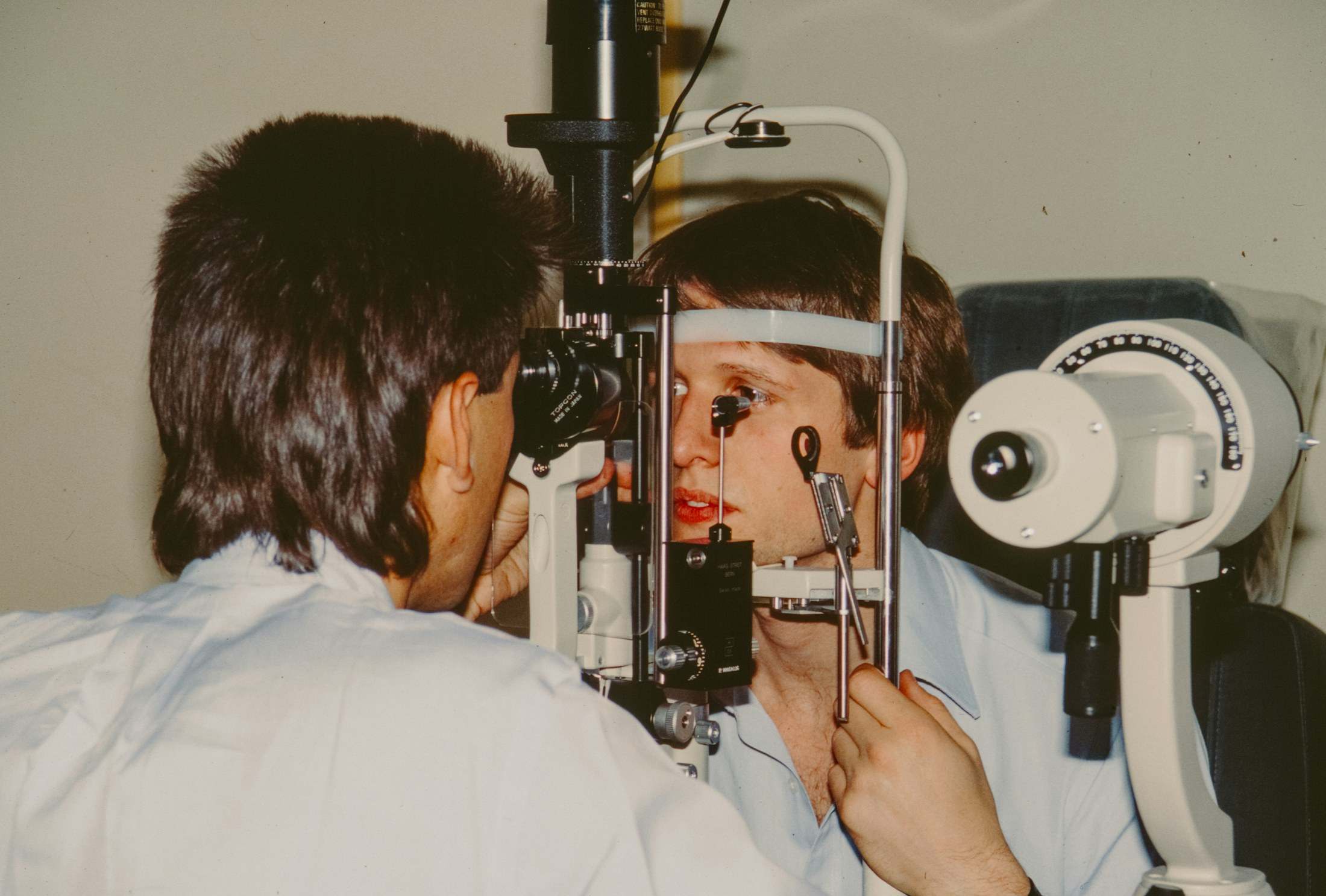
A cataract is a clouding of the eye’s natural lens. It most commonly develops with age; diabetes, long-term steroid use, eye injury and some congenital conditions can also cause cataract.
Treatment is surgical: the cloudy lens is removed and replaced with a permanent intraocular lens.
Signs and symptoms
- Gradually worsening blurred or foggy vision
- Glare and difficulty driving at night
- Colours appearing faded
- Frequent changes in prescription
Diagnosis
A slit-lamp examination, intraocular pressure measurement and fundus evaluation are performed. If surgery is planned, biometry is used to calculate the power of the intraocular lens.
Treatment options
- Phacoemulsification
- The lens is broken up with ultrasound and removed through a small incision, usually under topical anaesthesia as a day procedure.
- Intraocular lens options
- Monofocal, astigmatism-correcting (toric) and multifocal lenses are available; the choice is made together based on the eye and expectations.
- Post-operative care
- Recovery is monitored with eye drops and follow-up visits.
Frequently asked questions
Do I need to wait for the cataract to “ripen”?
No. With modern techniques there is no need to wait; surgery can be planned once the cataract begins to affect daily life.
Will I need glasses after surgery?
It depends on the lens chosen. With monofocal lenses, reading glasses may be needed; multifocal lenses can reduce dependence on glasses.
Before and after surgery: Before and after cataract surgery
The information on this site is general and does not replace an examination, diagnosis or treatment.