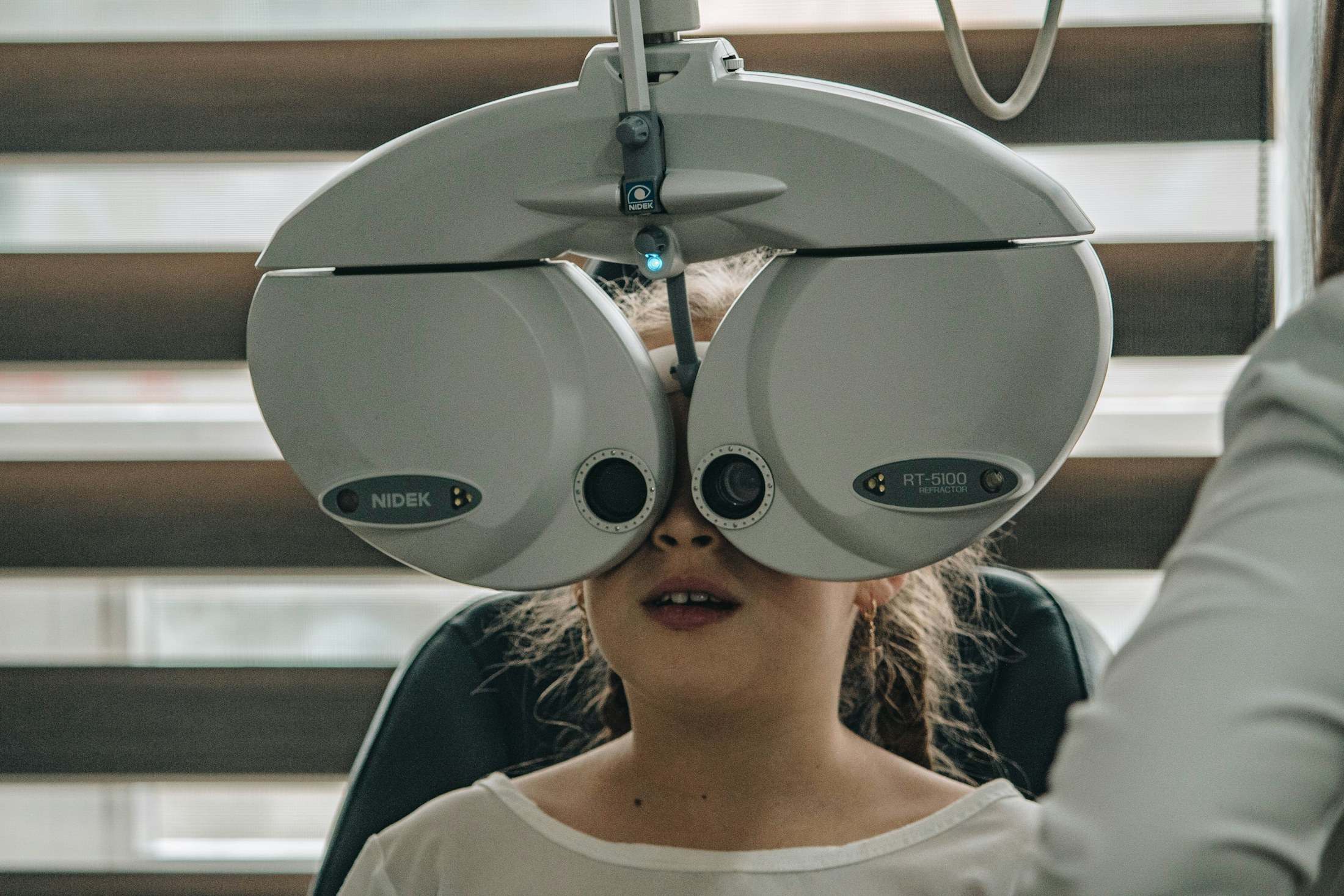
A child’s visual system develops rapidly during the first years of life. Refractive errors, strabismus or amblyopia that go unnoticed during this period can lead to permanent visual impairment. Children often cannot tell us that they do not see well, which is why regular examinations matter.
The prevalence of childhood myopia (short-sightedness) has been rising worldwide. Less time spent outdoors and intensive near work are among the main contributing factors.
Signs and symptoms
- Sitting very close to the TV, or holding tablets and books very close
- Squinting or frequent eye rubbing
- Headaches, difficulty seeing the board at school
- Marked light sensitivity or watering
- A white reflex in the pupil — this should be assessed without delay
Diagnosis
The examination is tailored to the child’s age: visual tests, cycloplegic refraction after drops, strabismus assessment and fundus examination. Babies born prematurely are also followed regularly for retinopathy of prematurity.
Treatment options
- Accurate prescription
- Correction is matched to the child’s age and visual development, and adaptation to glasses is followed up.
- Myopia control
- Methods aimed at slowing progression, such as low-dose atropine drops and spectacle lenses or contact lenses designed for myopia control.
- Lifestyle advice
- More time outdoors and sensible limits on screen time and near work.
- Regular monitoring
- Changes in refraction and axial length are tracked at regular intervals.
Frequently asked questions
Why are eye drops used in children’s eye exams?
Children have a very strong focusing (accommodative) ability, so their true refractive error can only be measured accurately with drops that temporarily relax focusing. The effect lasts from a few hours to a day, during which near vision may be blurred and light may feel bright.
Can myopia progression be stopped?
It cannot always be stopped completely, but there are now methods with scientifically demonstrated effectiveness in slowing progression. The appropriate approach depends on the child’s age and degree of myopia.
The information on this site is general and does not replace an examination, diagnosis or treatment.