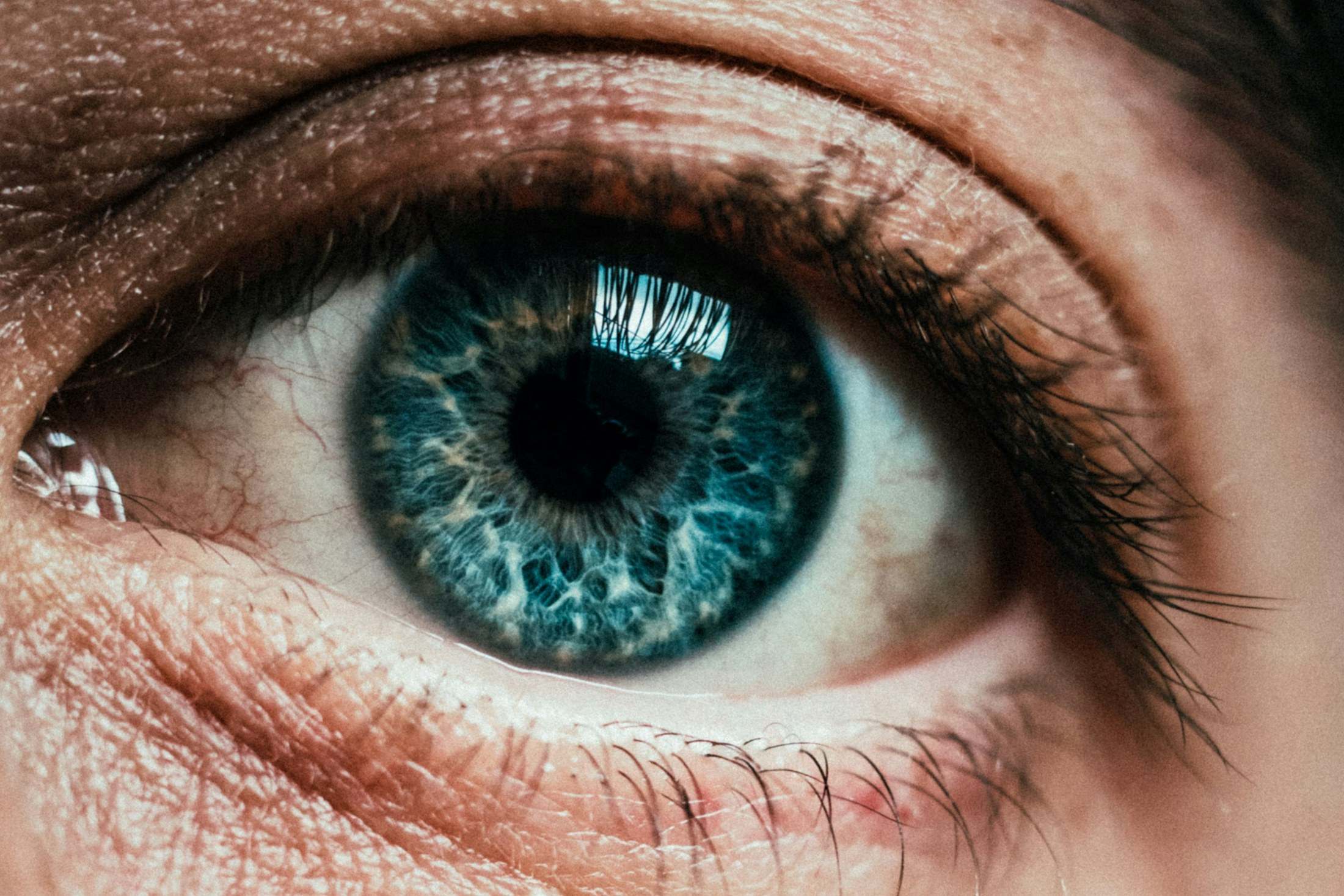
A pterygium is a triangular growth of conjunctival tissue — usually from the nasal side — onto the cornea. Long-term exposure to sunlight (ultraviolet light) is the main risk factor, and it is common in sunny regions such as Çukurova in southern Türkiye.
Signs and symptoms
- Pink-red, fleshy tissue on the white of the eye
- Redness, stinging or a foreign-body sensation
- Astigmatism and blurred vision when it grows onto the cornea
- Cosmetic concern
Diagnosis
Diagnosis is made by slit-lamp examination; corneal topography shows how the pterygium affects astigmatism and vision.
Treatment options
- Conservative care
- Artificial tears in early stages, short courses of drops during flare-ups, and UV protection.
- Graft-assisted surgery
- The pterygium is removed and the area is covered with the patient’s own conjunctival tissue (conjunctival autograft) to reduce recurrence.
- Sun protection
- UV-filtering sunglasses and a hat help reduce both growth and recurrence.
Frequently asked questions
Can a pterygium come back after surgery?
Recurrence is possible; graft-assisted techniques aim to reduce this risk. Sun protection and regular follow-up after surgery are important.
When is surgery needed?
Surgery may be planned when the growth advances towards the centre of the cornea, causes astigmatism or reduced vision, persistent irritation or significant cosmetic concern.
The information on this site is general and does not replace an examination, diagnosis or treatment.